

>
“Are you a model seeking guidance on how to create makeup looks that stand out on camera and bring vitality to your face?”
If so, you’re in luck! This article will provide you with valuable insights into the world of on-camera and off-camera makeup techniques. Model photoshoot makeup often differs from normal everyday makeup due to the specific requirements and objectives of a photoshoot.
Here are some reasons why model photoshoot makeup can be different:
Camera and Lighting: The primary purpose of model photoshoot makeup is to enhance the model’s features and ensure they look their best on camera. Professional cameras and studio lighting can wash out or dull the natural features of a model’s face. Therefore, makeup artists use specific techniques and products to compensate for the camera’s effects and create a more vibrant and defined look.
High-Definition Photography: With the advent of high-definition photography and close-up shots, makeup needs to be more precise and flawless. Model photoshoot makeup often involves techniques like contouring, highlighting, and color correction to create a more sculpted and defined appearance. This level of detail may not be as necessary for everyday makeup.
Conceptual and Creative Requirements: Photoshoots often have a specific theme, concept, or story that the photographer and creative team want to convey. The makeup is an essential element in bringing the vision to life. It can involve bold colors, exaggerated features, avant-garde designs, or artistic elements that may not be suitable for everyday wear.
Longevity and Durability: Model photoshoots can be lengthy, involving hours of shooting under hot lights and multiple outfit changes. The makeup used for these shoots needs to be long-lasting and sweat-resistant to maintain its intended look throughout the session. It often involves professional-grade products and techniques that ensure the makeup stays intact under challenging conditions.
Adapting to Different Styles: Models often need to showcase versatility and adapt to various styles and looks during a photoshoot. Makeup plays a crucial role in transforming the model’s appearance to suit different moods, themes, or clothing styles, ranging from natural and fresh-faced to dramatic and glamorous.
Collaborating with the Creative Team: Model photoshoot makeup is a collaborative effort between the model, the makeup artist, and the photographer. The makeup artist works closely with the creative team to ensure the makeup aligns with the overall vision and complements the styling, lighting, and photography techniques being employed.
It’s important to note that while model photoshoot makeup can be different from normal makeup, the techniques and concepts used can still inspire everyday makeup looks. Many people draw inspiration from the glamour and creativity of model photoshoots makeup to create unique and artistic looks for special occasions or personal expression.
When it comes to makeup for camera, there is a need to enhance certain features and create dimension that may not be as prominent in everyday makeup. Here’s a closer look at why daily makeup tricks may fall a bit flat on camera and lack dimension:
Camera’s Impact: Cameras can flatten the appearance of the face, making it lose some of its natural contours and depth. Everyday makeup tricks, which are often designed for in-person interactions, may not translate well on camera and can appear less noticeable or even disappear entirely. As a result, features like cheekbones, jawline, and eyes may appear less defined in photos or videos.
Lighting Considerations: Different lighting conditions, such as studio lighting or outdoor photography, can affect how makeup appears on camera. Harsh lights in a studio or bright sunlight outdoors can wash out certain makeup colors and textures, making them appear less vibrant or distinct. The lack of dimension in daily makeup tricks can become more apparent under intense lighting conditions.
High-Resolution Imaging: With the advancement of high-resolution cameras, every detail, including flaws and unevenness in makeup application, becomes more visible. Daily makeup tricks that are designed for close-up interactions may not hold up to the scrutiny of high-definition photography or video. To ensure a flawless and dimensional look on camera, specific techniques and products are used to create a more refined appearance.
Contouring and Highlighting: Contouring and highlighting play a crucial role in adding dimension to the face in photoshoot makeup. These techniques involve using darker shades to create shadows and depth in specific areas, and lighter shades to bring forward and highlight prominent features. While daily makeup may include some contouring and highlighting, it is often more subtle and may not create as much dimension as needed for camera.
Color Intensity: Colors can appear differently on camera compared to how they appear in person. Vibrant or bold colors that may look striking in everyday makeup can appear muted or less intense on camera. To ensure colors pop and appear true to their intended shade, makeup artists often use pigmented and highly saturated products specifically formulated for photography or video.
Longevity and Endurance: Model photoshoots can be lengthy, involving hours of shooting and multiple outfit changes. Makeup needs to withstand these conditions and maintain its intended look throughout the session. Daily makeup tricks, which are typically designed for shorter wear times, may not have the same longevity or endurance required for extended photoshoots.
In summary, while daily makeup tricks can enhance one’s appearance in person, they may not translate well on camera due to the camera’s impact, lighting considerations, high-resolution imaging, the need for contouring and highlighting, color intensity, and the requirement for long-lasting wear. Model photoshoot makeup, on the other hand, focuses on creating dimension and ensuring the makeup looks impactful and well-defined in photographs or videos.
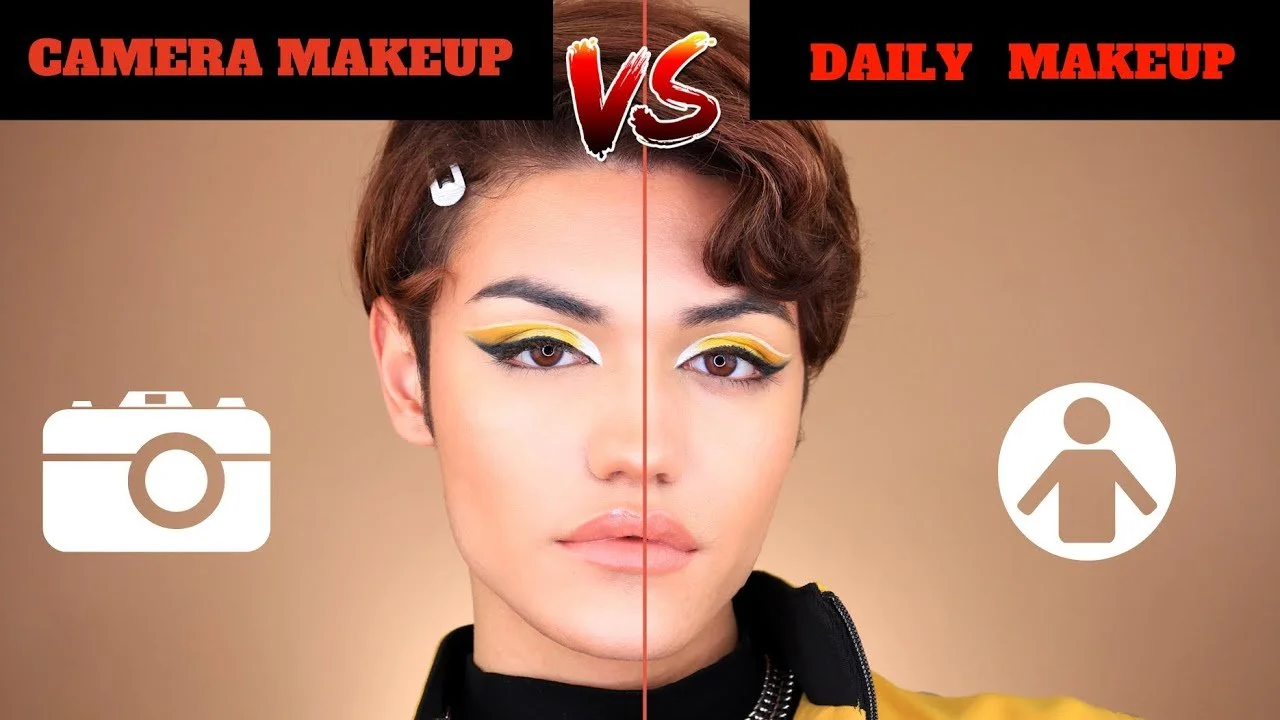
Can you spot the differences between Camera Makeup VS Daily Makeup?
When starting out as a model, it is highly recommended to learn how to do makeup that enhances your features and brings life to your face when captured by the camera. The camera can sometimes diminish the natural vibrancy and dimension of your face, so it’s important to know how to counteract that and make your features stand out. Actors, models, and entertainers, who frequently work in front of cameras, often have their own tricks and techniques for achieving on-camera makeup looks that are captivating and impactful. By learning from their secrets, you can develop your own skills and create a makeup routine that works for you.
These professionals have honed their craft through experience and working with makeup artists who specialize in camera-ready looks. They have learned how to use makeup to enhance their facial features, make their eyes pop, create a flawless complexion, and ensure their overall appearance translates well on camera.
While specific techniques and products can vary among individuals, here are some general tips to consider when doing your own on-camera makeup:
Here’s a video that I swear by for doing my “on-camera” makeup:

Featured


The world of modeling is a captivating yet enigmatic one, often shrouded in misconceptions and unanswered questions. Whether you’re an aspiring model or simply curious about the industry, you’ve likely pondered some of the most common queries surrounding this glamorous profession. In this blog post, we aim to demystify the modeling world by answering the most popular questions.